
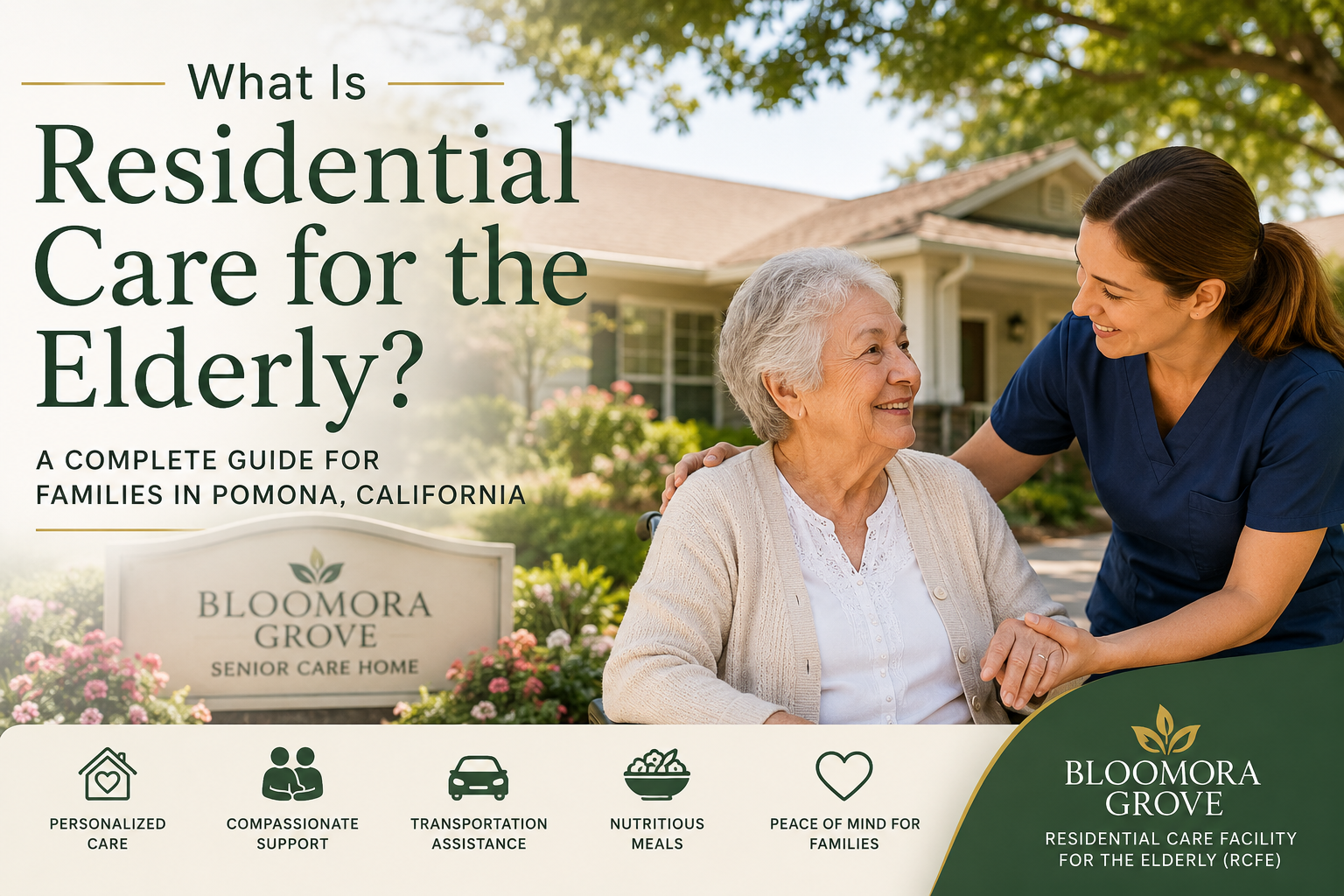
Finding the right Residential Care Facility for the Elderly (RCFE) for an aging loved one can feel overwhelming. Families are often faced with difficult questions about safety, independence, health, and quality of life. Understanding the different senior care options available is an important first step toward making a confident and informed decision.
One term that families throughout California frequently encounter is Residential Care for the Elderly, often referred to as an RCFE. While the term may sound unfamiliar, these residential care homes play an important role in helping older adults receive the support they need while enjoying the comfort and familiarity of a home-like environment.
If you are researching senior care options in Pomona, Claremont, La Verne, Chino Hills, Diamond Bar, San Dimas, Montclair, or nearby communities, this guide will help you understand what a Residential Care Facility for the Elderly is, how it differs from other senior living options, and what to look for when choosing the right care home.
What Is a Residential Care Facility for the Elderly?
A Residential Care Facility for the Elderly (RCFE) is a licensed residential setting that provides non-medical care and supervision for older adults who need assistance with daily living activities.
Unlike large institutional facilities, many residential care homes operate in comfortable residential neighborhoods and are designed to provide personalized support in a warm and welcoming environment.
Residents may receive assistance with:
- Daily personal care
- Medication reminders and support
- Meal preparation
- Housekeeping and laundry
- Transportation assistance
- Social engagement and companionship
- Mobility support
- Safety supervision
The goal of residential care for the elderly is to help seniors maintain dignity, independence, comfort, and quality of life while receiving the support they need.
Why Families Choose Residential Care Facilities for the Elderly
Many families discover that a smaller residential care setting offers advantages that larger facilities may not always provide.
One of the greatest benefits is personalized attention.
Because residential care homes typically serve fewer residents, caregivers often have more opportunities to build meaningful relationships with residents and better understand their individual preferences, routines, and needs.
Families often appreciate:
A Home-Like Environment
Residential care homes are designed to feel welcoming and comfortable rather than institutional. Residents can enjoy familiar surroundings, comfortable common areas, outdoor spaces, and a more personal atmosphere.
Individualized Care
Every senior has unique needs. Residential care facilities can often provide more personalized support tailored to each resident’s lifestyle, preferences, and care requirements.
Enhanced Family Communication
Smaller care environments frequently allow for stronger communication between caregivers and family members, helping families remain informed and involved.
Greater Comfort and Familiarity
Many seniors feel more relaxed in a residential setting that resembles a home rather than a large medical facility.
Who Can Benefit from a Residential Care Facility for the Elderly?
Residential care may be appropriate for seniors who:
- Need assistance with daily activities
- Require medication support
- Benefit from supervision and companionship
- Experience mobility challenges
- Are at risk of isolation when living alone
- Need a safer living environment
- Want to maintain independence while receiving support
For many families, residential senior care provides a balance between independence and assistance that can improve overall well-being and peace of mind.
Understanding the Difference Between RCFEs and Nursing Homes
One common misconception is that Residential Care Facilities for the Elderly and nursing homes provide the same level of care.
While both serve seniors, there are important differences.
Residential Care Facilities for the Elderly
RCFEs focus on non-medical assistance and daily living support.
Services often include:
- Personal care assistance
- Medication support
- Meal preparation
- Transportation services
- Social activities
- Daily supervision
Skilled Nursing Facilities
Nursing homes provide higher levels of medical care and clinical services for individuals with significant medical needs that require licensed nursing supervision.
Understanding this distinction helps families determine which environment may be most appropriate for their loved one’s circumstances.
The Importance of Personalized Senior Care in a Residential Care Facility for the Elderly
Every senior’s journey is unique.
Some individuals may need occasional assistance with daily activities, while others require more comprehensive support throughout the day.
Personalized senior care focuses on understanding the individual rather than applying a one-size-fits-all approach.
Quality residential care facilities take the time to learn about each resident’s:
- Daily routines
- Preferences
- Interests
- Health considerations
- Social needs
- Family relationships
This personalized approach can contribute significantly to comfort, emotional well-being, and quality of life.
Transportation Services and Daily Support
Transportation is one of the most valuable yet often overlooked services offered by many residential care facilities.
For older adults, maintaining access to medical appointments and community activities is essential.
Transportation assistance can help residents:
- Attend doctor appointments
- Visit specialists
- Participate in activities
- Maintain social connections
- Access community resources
Families often find peace of mind knowing their loved ones have reliable support when transportation needs arise.
Nutrition and Healthy Living
Good nutrition plays an important role in supporting healthy aging.
Residential care homes often provide nutritious home-style meals designed to support residents’ dietary needs while creating opportunities for social interaction and community.
Shared meals can promote:
- Better nutrition
- Social engagement
- Daily structure
- Emotional well-being
Dining together also helps foster a sense of belonging and community among residents.
The Role of Compassionate Caregivers
The quality of caregivers is often one of the most important factors families consider when evaluating senior care options.
Compassionate caregivers do much more than assist with daily tasks.
They provide:
- Emotional support
- Encouragement
- Companionship
- Reassurance
- Meaningful human connection
Strong caregiver relationships can have a significant positive impact on a resident’s overall happiness and quality of life.
Families frequently report that trusting relationships with caregivers provide comfort and confidence during the transition to residential care.
Choosing the Right Residential Care Facility for the Elderly
Selecting a care home is an important decision.
When touring residential care facilities, families should consider several factors.
Caregiver Experience
Ask about caregiver training, experience, and the facility’s approach to resident care.
Environment
Observe whether the home feels welcoming, clean, comfortable, and well-maintained.
Resident Engagement
Notice how caregivers interact with residents and whether residents appear comfortable and supported.
Safety
Review safety features and supervision practices designed to protect residents.
Communication
Evaluate how the care team communicates with families and keeps them informed.
Services
Confirm that the facility provides the support services your loved one needs now and potentially in the future.
Residential Care for the Elderly in Pomona, California
Families throughout Pomona Valley are increasingly seeking senior care options that combine professional support with a warm and personalized residential environment.
Communities served by residential care homes often include:
- Pomona
- Claremont
- La Verne
- Montclair
- Chino
- Chino Hills
- Diamond Bar
- San Dimas
- Spadra
- Surrounding Pomona Valley communities
The convenience of remaining close to family while receiving personalized care can be an important consideration for many seniors and their loved ones.
Why Families Value a Home-Like Senior Care Environment
A comfortable residential setting can offer emotional benefits that extend beyond physical care.
Many seniors appreciate environments that feel familiar, peaceful, and welcoming.
A home-like atmosphere may help residents:
- Feel more relaxed
- Maintain independence
- Build relationships
- Stay socially connected
- Enjoy daily routines
- Experience greater comfort
These qualities can contribute to a more positive and fulfilling senior living experience.
Schedule a Tour and Learn More
If you are exploring Residential Care for the Elderly options in Pomona, California, visiting a care home in person is one of the best ways to understand the environment, meet caregivers, and determine whether it may be a good fit for your loved one.
At Bloomora Grove, we are committed to providing compassionate residential senior care in a warm and welcoming environment where residents are treated with dignity, respect, and kindness.
We invite families throughout Pomona, Claremont, La Verne, Chino Hills, Diamond Bar, San Dimas, Montclair, and nearby communities to learn more about our approach to personalized care and supportive living.
Contact Bloomora Grove today to schedule a private tour and discover how compassionate residential care can provide comfort, support, and peace of mind for your family.